



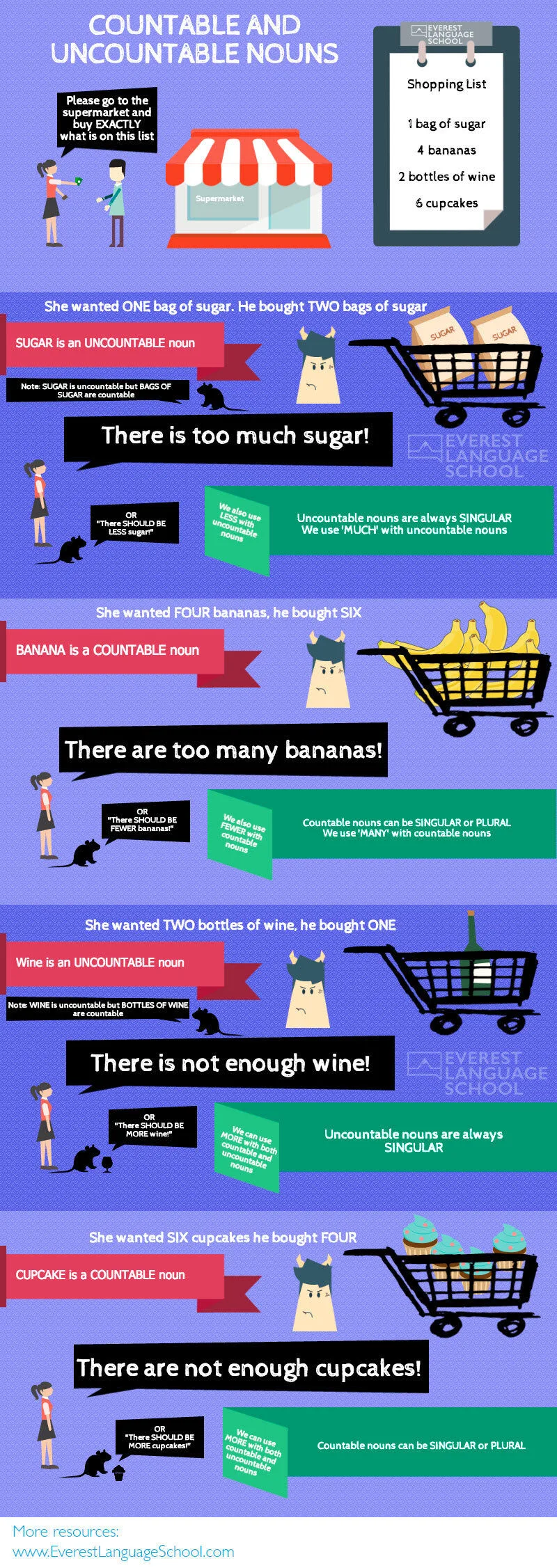

A volte in inglese ci sono troppe regole da seguire. A volte imparare una lingua può sembrare troppo faticoso, soprattutto quando non hai abbastanza tempo. Abbiamo preparato questa infografica per aiutarti a capire e ricordare alcune regole sull’uso di too much, too many e not enough. Se hai domande, scrivici nei commenti. E se c’è qualcos’altro che vuoi che ti spieghiamo, chiedicelo qui sotto.
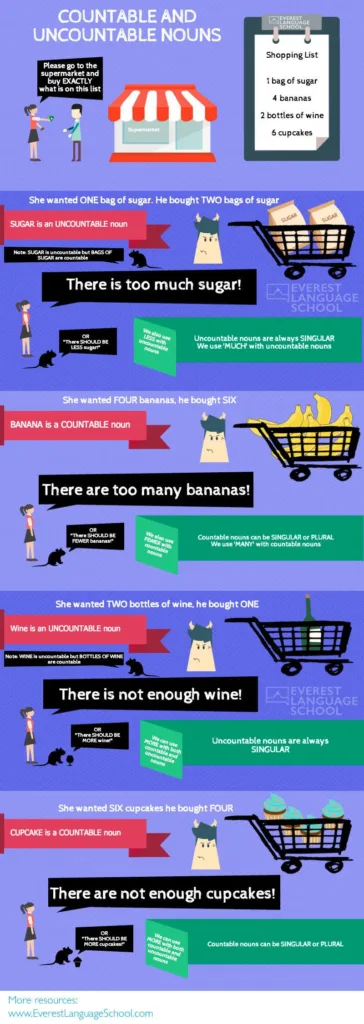
TOO MUCH, TOO MANY e NOT ENOUGH
TOO MUCH e TOO MANY
Usiamo TOO MANY + SOSTANTIVO NUMERABILE
Usiamo TOO MUCH + SOSTANTIVO NON NUMERABILE
There are too many books in granddad’s house! (Ci sono troppi libri a casa del nonno!)
The boy has put too much sugar on his grapefruit! (Il bambino ha messo troppo zucchero sul pompelmo!)
NOT ENOUGH
There is not enough sugar in my coffee (Non c’è abbastanza zucchero nel mio caffè)
There are not enough chairs (Non ci sono abbastanza sedie)
LA SAGGEZZA DELLO SHERPA: nota che ENOUGH va PRIMA di un SOSTANTIVO
TOO
Usiamo Too + un AGGETTIVO
The boy is too small to ride the rollercoaster = The boy is not tall enough to ride the rollercoaster (Il bambino è troppo piccolo per salire sulle montagne russe = Il bambino non è abbastanza alto per salire sulle montagne russe)
LA SAGGEZZA DELLO SHERPA: nota che ENOUGH va DOPO un aggettivo
ERRORI COMUNI
The coffee is too much hot for me The coffee is too hot for me
I like Dublin too much I like Dublin a lot/ I really like Dublin
I am too much happy I am very happy/ I am really happy