








IELTS Task 1 Band 9
Qui sotto trovi una domanda di esempio dell’IELTS Task 1 con una risposta modello. Si stima che la risposta ottenga un punteggio di Band 9. Leggi prima la risposta, poi la analizziamo nel dettaglio.
Fonte: IELTS Buddy
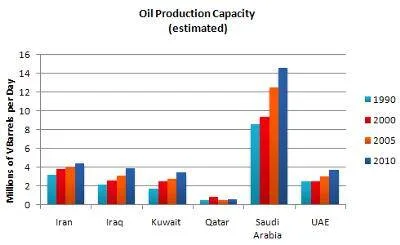
The table below shows the estimated oil capacity of six countries, in millions of barrels per day, from 1990 to 2010.
Summarise the information by selecting and reporting the main features, and make comparisons where relevant.
You should spend about 20 minutes on this task.
Write at least 150 Words.
Risposta modello
The bar chart illustrates the estimated amount of oil produced in 6 countries between 1990 and 2010, measured in millions of barrels per day.
Overall, oil production capacity tended to increase during this 20-year period. The figures for Saudi Arabia were significantly higher than in the other countries, while production was lowest in Qatar.
From 1990 to 2010, there was a significant increase in oil production in Saudi Arabia. In 1990, just over 8 million barrels per day were produced and this rose steadily, reaching a peak of over 14 million barrels per day in 2010. In contrast, the smallest producer was Qatar. Despite a slight increase in 2000, production in Qatar remained relatively stable at less than 1 million barrels per day.
The other countries saw a slight rise in oil production over the period. The estimated figure for Iran in 1990 was over 3 million barrels per day, compared with around 2 million barrels in the other three countries. Although production did not increase in 2000 in the UAE, the amount of oil produced peaked in 2010 in Iran at over 4 million barrels and at almost 4 million barrels in Iraq, Kuwait and the UAE.
(198 parole)
Punteggio IELTS Task 1: Band 9
Task Achievement (svolgimento del compito): 9
Coherence & Cohesion (coerenza e coesione): 9
Lexical Resource (lessico): 9
Grammatica: 9
Punteggio complessivo: Band 9
Analisi
Paragrafo 1
Il paragrafo iniziale contiene tutte le informazioni chiave sul grafico, ma riformula la domanda. Questo è molto importante. Usa sinonimi e riformula sempre la tua risposta. Per esempio, in questo caso:
“shows” diventa “illustrates”
“oil capacity” diventa “amount of oil”
“from 1990 to 2010” diventa “between 1990 and 2010”
Paragrafo 2
Questo paragrafo offre una panoramica chiara del grafico. La tendenza generale è un aumento della capacità, ma c’è una grande differenza tra l’Arabia Saudita e il Qatar. Il paragrafo dimostra un’ottima padronanza della grammatica e del lessico richiesti: “Tended to increase”; “20-year period” (e non 20-year s period); “significantly higher than”.
Paragrafo 3
Questo paragrafo approfondisce i due paesi più significativi: Arabia Saudita e Qatar. Segue in modo chiaro il paragrafo precedente, che aveva messo in evidenza proprio questi due paesi. Tutto il lessico chiave per descrivere l’andamento di un grafico è usato correttamente (“significant increase”; “rose steadily”; “reaching a peak”; “remained relatively stable”). Ci sono due frasi sull’Arabia Saudita e poi due sul Qatar, collegate correttamente dall’espressione “in contrast”. Il paragrafo è molto ben strutturato e coeso, senza errori di grammatica e con un’ottima varietà di vocaboli.
Paragrafo 4
Il paragrafo 4 descrive nel dettaglio i quattro paesi rimanenti. Anche qui, tutto il linguaggio per descrivere un grafico è preciso: “saw a slight rise”, “peaked in 2010”. Anche le preposizioni sono usate correttamente (gli studenti spesso le confondono): “a rise in production”, “ in 1990”, “compared with” , “peaked in 2010 in Iran at over 4 million barrels”
In generale
Questa risposta mostra tutto ciò che serve per ottenere Band 9 nell’IELTS Task 1. È chiara e ben strutturata, con un uso abile dei paragrafi e dei connettivi. Presenta un’ampia gamma di vocaboli molto naturali per descrivere un grafico e non ci sono errori di ortografia. Non ci sono errori di grammatica e c’è un’ottima varietà di strutture complesse.
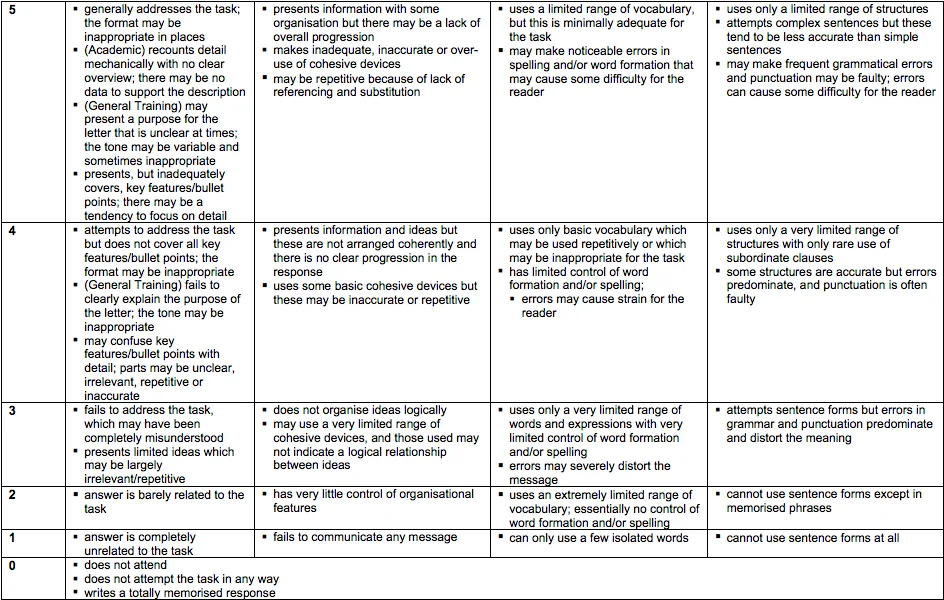
Criteri di valutazione dell’IELTS Task 1:
PDF dei band descriptors dell’IELTS Task 1 Writing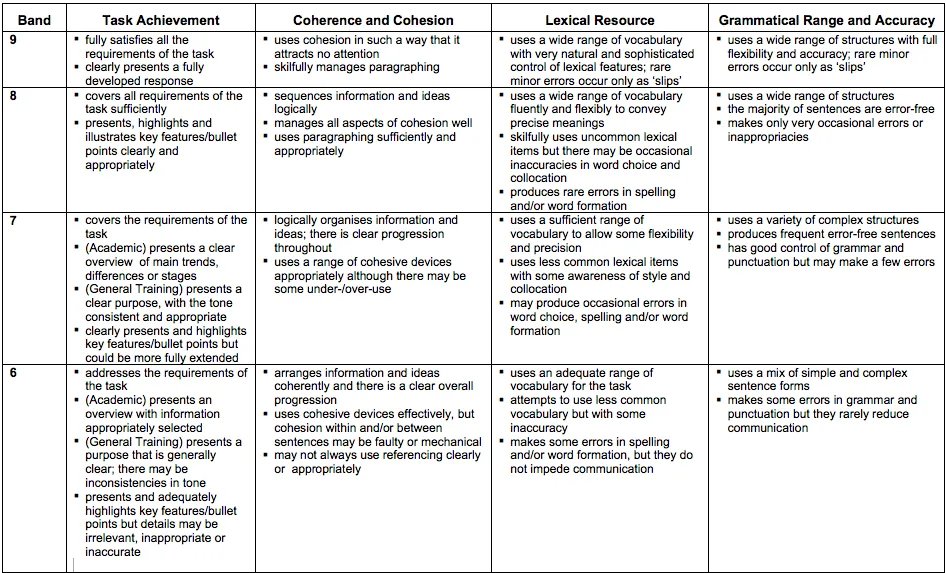
Questo articolo è stato scritto da Conor Reid, insegnante di Everest Language School e podcaster letterario
Puoi prepararti all’esame IELTS a Dublino con uno dei nostri corsi di IELTS Preparation.