






Alcuni punti avanzati sugli articoli determinativi e indeterminativi:
Categorie (registro formale): The tiger is threatened with extinction.
Per indicare l’opera di un artista: My mother found a Salvador Dali in the attic.
Gruppi nazionali: The Irish are known to be great writers and drinkers.
Nelle misure si può usare ‘a/an’ al posto di ‘per’: If petrol costs €1 a litre and your car is travelling at 50 miles an hour, how much will it cost to drive for 10 miles?
Alcuni gruppi plurali (politici, musicali o di altro tipo): The government is evenly divided between the Social Democrats and the Green Party.
Per indicare una professione: Otavio hopes to be a cosmonaut when he grows up.
Oggetti unici: Which is further from earth, the sun or the moon?
Per sottolineare che una persona è sconosciuta: Miss Moneypenny said to Mr. Bond “a Mr. Evil called while you were saving the world”.
Con i titoli e le cariche (di solito sono unici): Anne Marie is the Director of Studies in our school.
Nomi di giornali (‘The’ si scrive con la maiuscola): The Irish Times gives more accurate information than the Sun.
Usa ‘the’ quando parli della capacità di suonare uno strumento: Ko is learning how to play the bassoon.
Con il nome di un’università solo se è seguito da una specificazione: He studied in the University of Chicago, but his girlfriend studied in Oxford University.
Nessun articolo prima di ‘most’ quando significa ‘la maggior parte’: Most Americans can’t point out Paris on a map.
‘The’ va prima di ‘most’ quando si usa come superlativo: Paris is the most romantic city in Europe.
LA PRONUNCIA DEGLI ARTICOLI
Ci sono alcune cose da ricordare sulla pronuncia degli articoli. ‘A’ si usa prima dei suoni consonantici e ‘an’ prima dei suoni vocalici. Devi ascoltare il suono, non guardare solo l’ortografia. Quindi diciamo: ‘An effect’ e ‘an FBI agent’, perché entrambi iniziano con il suono /e/. Diciamo: ‘A yellow submarine’ e ‘a European’, perché entrambi iniziano con /j/.
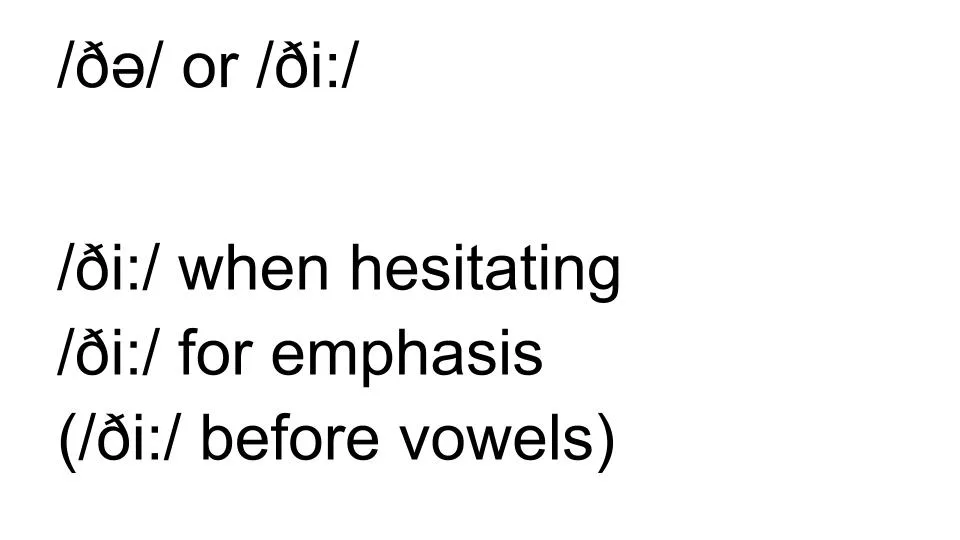
Ci sono due modi di pronunciare ‘the’. Nel 90% dei casi diciamo: /ðə/. In alcuni casi eccezionali pronunciamo ‘the’ come ‘thee'( /ði:/ ).