








Alguns pontos avançados sobre artigos definidos e indefinidos:
Classes (formal): The tiger is threatened with extinction.
Para nomear uma obra de um artista: My mother found a Salvador Dali in the attic.
Grupos nacionais: The Irish are known to be great writers and drinkers.
Em medidas, ‘a/an’ pode ser usado no lugar de ‘per’: If petrol costs €1 a litre and your car is travelling at 50 miles an hour, how much will it cost to drive for 10 miles?
Alguns grupos no plural (políticos, musicais, etc.): The government is evenly divided between the Social Democrats and the Green Party.
Para nomear profissões: Otavio hopes to be a cosmonaut when he grows up.
Objetos únicos: Which is further from earth, the sun or the moon?
Para enfatizar que uma pessoa é desconhecida: Miss Moneypenny said to Mr. Bond “a Mr. Evil called while you were saving the world”.
Para cargos (que costumam ser únicos): Anne Marie is the Director of Studies in our school.
Nomes de jornais (‘The’ com letra maiúscula): The Irish Times gives more accurate information than the Sun.
Use ‘the’ ao falar da habilidade de tocar um instrumento: Ko is learning how to play the bassoon.
Nome de universidade só quando há um complemento depois: He studied in the University of Chicago, but his girlfriend studied in Oxford University.
Artigo zero antes de ‘most’ quando significa ‘a maioria’: Most Americans can’t point out Paris on a map.
‘The’ vem antes de most quando é usado como superlativo: Paris is the most romantic city in Europe.
PRONÚNCIA DOS ARTIGOS
Há algumas coisas que você precisa lembrar sobre a pronúncia dos artigos. ‘A’ é usado antes de sons consonantais e ‘an’ é usado antes de sons vocálicos. Você precisa prestar atenção ao som, não só à grafia. Por isso dizemos: ‘An effect’ e ‘an FBI agent’, porque os dois começam com o som /e/. Dizemos: ‘A yellow submarine’ e ‘a European’, porque os dois começam com /j/.
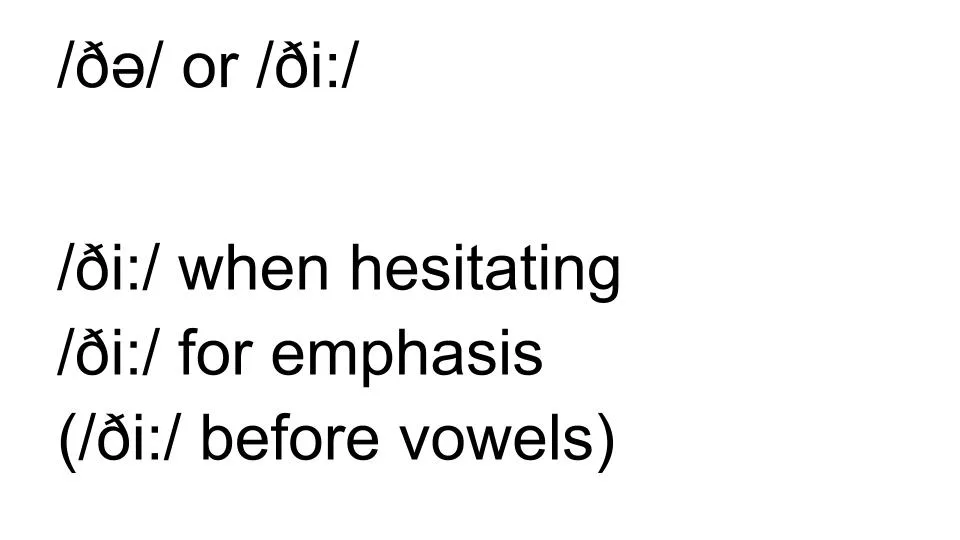
Há duas formas de pronunciar ‘the’. Em 90% dos casos dizemos: /ðə/. Em alguns casos excepcionais, pronunciamos ‘the’ como ‘thee'( /ði:/ ).