




Verwendung des Artikels im Englischen: fortgeschrittene Regeln für bestimmte und unbestimmte Artikel:
Gattungen (formell): The tiger is threatened with extinction.
Um ein Werk eines Künstlers zu benennen: My mother found a Salvador Dali in the attic.
Nationalitäten als Gruppe: The Irish are known to be great writers and drinkers.
Bei Maßangaben kann „a/an“ statt „per“ stehen: If petrol costs €1 a litre and your car is travelling at 50 miles an hour, how much will it cost to drive for 10 miles?
Manche politischen, musikalischen und anderen Gruppen im Plural: The government is evenly divided between the Social Democrats and the Green Party.
Bei Berufen: Otavio hopes to be a cosmonaut when he grows up.
Bei einzigartigen Dingen: Which is further from earth, the sun or the moon?
Um zu betonen, dass eine Person unbekannt ist: Miss Moneypenny said to Mr. Bond “a Mr. Evil called while you were saving the world”.
Bei Titeln (die meist einzigartig sind): Anne Marie is the Director of Studies in our school.
Bei Zeitungsnamen („The“ wird großgeschrieben): The Irish Times gives more accurate information than the Sun.
„The“ verwenden, wenn es ums Spielen eines Instruments geht: Ko is learning how to play the bassoon.
Bei Universitätsnamen nur mit nachgestellter Ergänzung: He studied in the University of Chicago, but his girlfriend studied in Oxford University.
Kein Artikel vor „most“, wenn es „die Mehrheit“ bedeutet: Most Americans can’t point out Paris on a map.
„The“ steht vor „most“, wenn es einen Superlativ bildet: Paris is the most romantic city in Europe.
Aussprache der Artikel
Bei der Aussprache der Artikel gibt es einiges zu beachten. „A“ steht vor Konsonantenlauten und „an“ vor Vokallauten. Achten Sie also auf den Laut, nicht nur auf die Schreibweise. Deshalb sagen wir „an effect“ und „an FBI agent“, denn beide beginnen mit dem Laut /e/. Und wir sagen „a yellow submarine“ und „a European“, denn beide beginnen mit /j/.
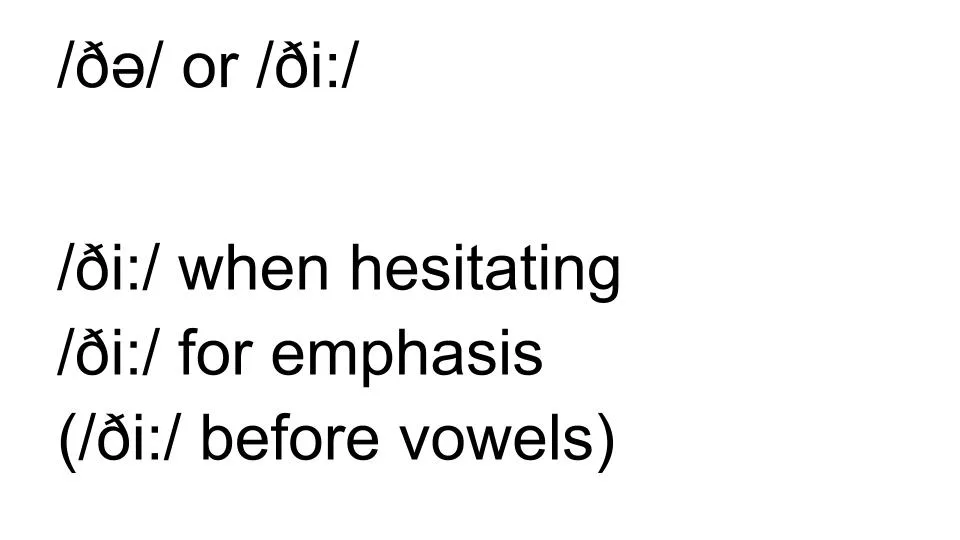
„The“ kann man auf zwei Arten aussprechen. In 90 % der Fälle sagen wir /ðə/. In einigen Ausnahmefällen sprechen wir „the“ wie „thee“ ( /ði:/ ) aus.